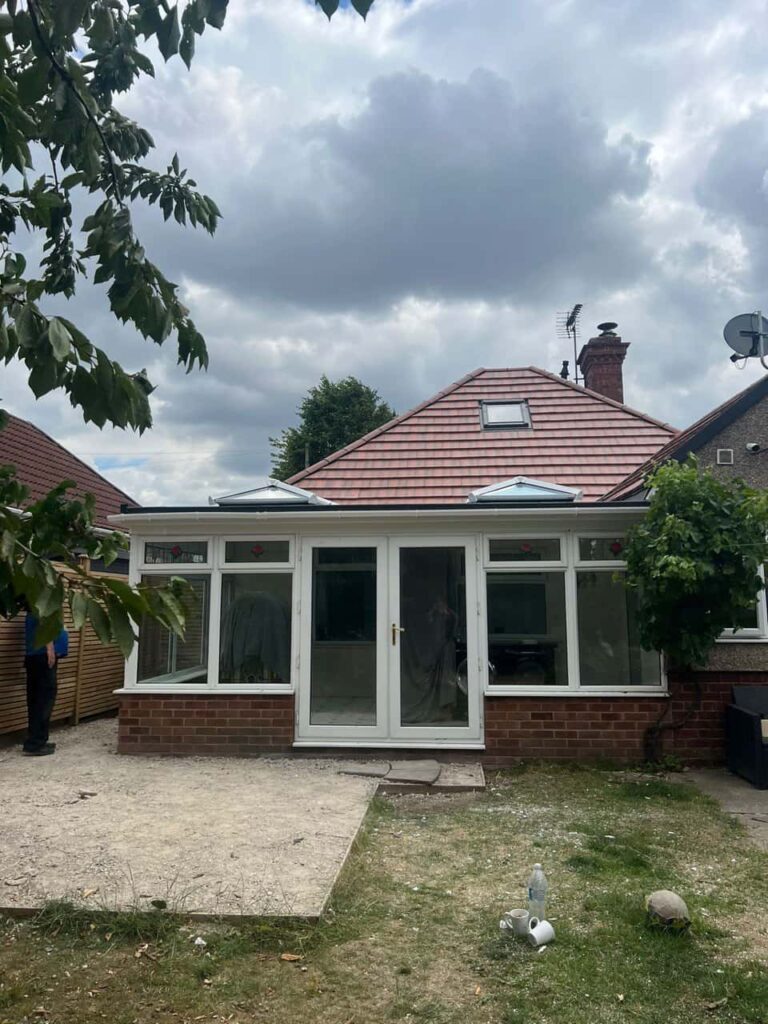
Chimneys are among the most complex junctions on a roof. They interrupt the roof covering, create several vulnerable joints and remain exposed to wind and rain throughout the year. When water appears near a chimney breast, the source may be the chimney itself, the surrounding leadwork or an adjoining section of the roof.
Identifying the cause requires more than looking at the location of an internal damp patch. Water can travel beneath tiles, along timbers or behind damaged finishes before becoming visible inside the property.
For homeowners in Redhill, Surrey, a careful chimney and roof inspection can distinguish between a localised defect and a wider roofing problem requiring more extensive attention.
Which Parts of a Chimney Can Cause a Roof Leak?
Several components work together to keep the junction between a chimney and roof watertight. If one element deteriorates, water may enter even though the rest of the roof appears sound.
Lead Flashing Around the Chimney
Flashing seals the joints where the chimney passes through the roof. Different sections are installed around the sides, front and rear of the stack to direct water onto the roof covering.
Lead can split, lift or pull away over time. The mortar holding it within the chimney joints may also loosen, leaving gaps through which rain can enter. Previous patching with unsuitable materials can conceal the problem temporarily without creating a dependable seal.
An inspection should check whether the flashing is correctly positioned, securely fixed and properly integrated with the surrounding tiles or slates.
The Back Gutter Behind the Stack
The back gutter sits on the upper side of the chimney, where rainwater runs down the roof towards the stack. Its purpose is to direct this water safely around the chimney.
Leaves, moss and other debris can obstruct this area. Water may then collect rather than drain away, increasing the likelihood of it entering through weak joints. Splits, poor detailing or insufficient upstands within the back gutter can also result in leakage during persistent rainfall.
Because this section is often difficult to see from ground level, defects may remain unnoticed until damp appears indoors.
Damaged Mortar Joints
The mortar between chimney bricks is continually exposed to weathering. As it deteriorates, joints can crack, crumble or fall away, allowing moisture to penetrate the stack.
Minor surface wear does not always cause an immediate leak, but open joints can absorb increasing amounts of water. During prolonged wet conditions, moisture may pass through the masonry and affect the chimney breast or nearby roof timbers.
The extent of the deterioration should be assessed before deciding whether localised repointing or more comprehensive work is required.
Cracked Chimney Flaunching
Flaunching is the sloping mortar around the base of the chimney pots. It helps hold the pots securely and directs rainwater away from the top of the stack.
Cracks can develop as the mortar ages and experiences repeated temperature changes. Water entering these cracks may travel into the chimney structure and contribute to dampness below. Loose, uneven or badly deteriorated flaunching should therefore form part of any chimney inspection.
Chimney Pots and Cowls
A cracked chimney pot can allow water into the stack. Missing, damaged or unsuitable cowls may also leave an opening exposed to rain, particularly during windy conditions.
However, the correct arrangement depends on whether the flue remains in use and how it is ventilated. Simply covering an opening without considering airflow can create other moisture problems. The chimney pots, terminals and ventilation should consequently be assessed as part of the complete structure.
Porous or Damaged Brickwork
Chimney bricks can deteriorate through long-term exposure to moisture and changing temperatures. Spalled faces, cracks and loose sections can allow the stack to absorb more water than it should.
Saturated masonry may produce damp symptoms even when no single large opening is visible. It is therefore important to inspect the condition of the bricks rather than concentrating exclusively on the flashing.
Tiles or Slates Beside the Chimney
A leak near a chimney does not necessarily originate from the stack. Cracked tiles, slipped slates or damaged fixings in the surrounding roof covering can allow water underneath.
Water may then travel towards the chimney opening or become visible along the chimney breast. Checking the adjoining roof area helps avoid repairing the wrong component while leaving the actual entry point unresolved.
Internal Condensation and Ventilation
Not every damp mark associated with a chimney is caused by rain. An unused or poorly ventilated flue can retain moisture, leading to condensation within the stack.
This possibility should be considered when dampness occurs without a clear relationship to rainfall. Establishing whether the issue is penetrating water or internal condensation is essential because the two problems require different solutions.
Clues That the Chimney May Be Leaking
Possible signs of water entering around a chimney include:
- Damp patches on or beside the chimney breast
- Staining that becomes more noticeable after rain
- Peeling paint or damaged plaster near the stack
- Moisture within the roof space
- Decayed timbers around the chimney opening
- Loose mortar or visible gaps in the flashing
- Debris collecting in the back gutter
These signs indicate that further investigation is appropriate, but they do not confirm the exact source on their own.
Why Professional Diagnosis Matters
Chimney-related leaks can involve several overlapping defects. Treating one visible crack may not resolve the problem if deteriorated flashing, damaged masonry or displaced roof coverings are also allowing water to enter.
Redhill Roofing Repairs can inspect chimney stacks and adjoining roof areas in Redhill, Surrey, trace the likely route of moisture and determine which components need attention. A focused assessment helps ensure that any repair addresses the source rather than only the internal symptom.
Conclusion
A chimney can cause a roof leak through failed flashing, a damaged back gutter, cracked flaunching, deteriorated mortar or porous brickwork. Nearby tiles, chimney terminals and internal ventilation should also be examined before the cause is confirmed.
As water can travel away from its original entry point, the position of an indoor damp mark is not always a reliable guide. If you have noticed signs of moisture around a chimney in Redhill, Surrey, contact Redhill Roofing Repairs to arrange a professional inspection and identify the appropriate repair.
Call us on: 01737 949 790
Click here to find out more about Redhill Roofing Repairs
Click here to complete our contact form and see how we can help with your roofing needs.